


Emil Torday And The Art Of The Congo 1900-1909
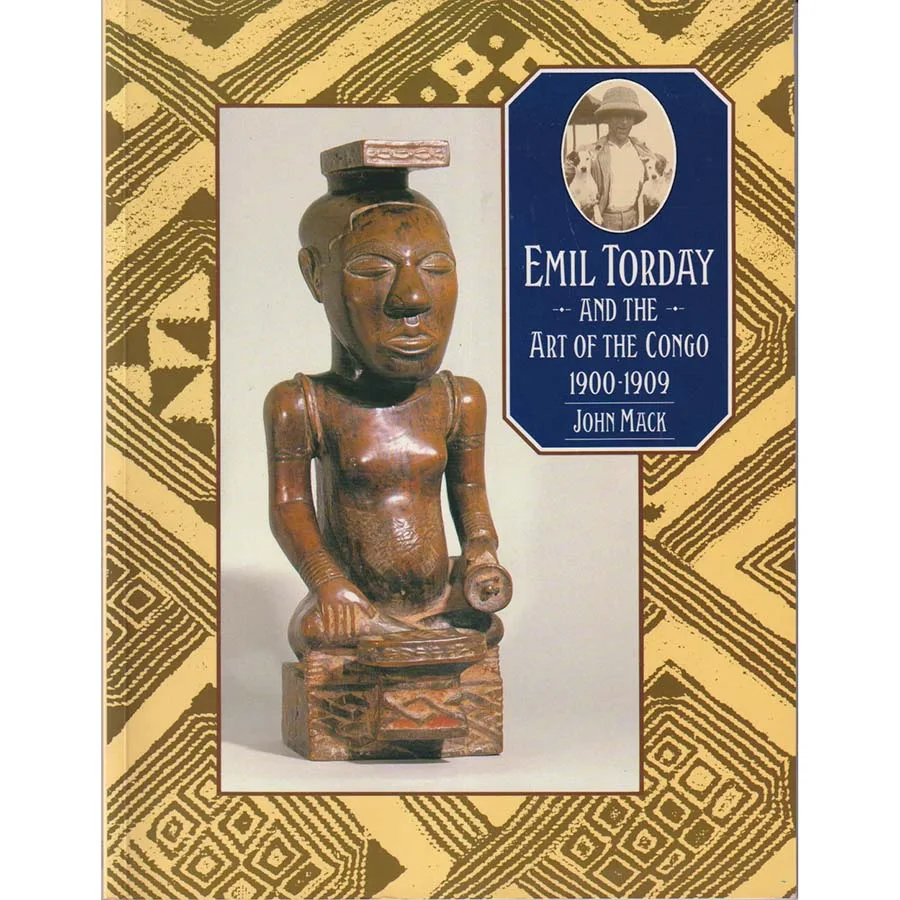
Publisher: British Museum Press
Format: Paperback
ISBN: 9780714115948
Emil Torday and the Art of the Congo 1900-1909 by John Mack, published by British Museum Press in 1990, is the sort of book that begins with ethnography and art history and very quickly reminds you that museum collections often have biographies every bit as complicated as the objects inside them.
Emil Torday was a Hungarian-born explorer and ethnographer who worked in Central Africa during the early years of the twentieth century, collecting objects, recording information and documenting communities in what was then the Belgian Congo. The material he gathered later became an important part of the British Museum’s African collections, making him one of those figures whose name tends to appear whenever the provenance of early ethnographic material is discussed in any depth.
This book examines both Torday himself and the extraordinary range of objects associated with his expeditions. Masks, sculpture, textiles and ceremonial objects are considered not merely as decorative pieces, but as products of specific peoples, places and systems of belief.
That matters, because African art spent far too long in European museums being displayed under labels so vague they might as well have read “Interesting Object From Somewhere Large”. John Mack’s study helps restore context, history and cultural meaning to material that was collected in an era when Europeans were often much better at removing things than explaining them.
The period covered, 1900 to 1909, is particularly significant. This was the age of colonial expansion, ethnographic collecting and a rapidly growing European fascination with African material culture. It was also a period in which the power relationships surrounding collecting were anything but simple, and modern readers will inevitably approach the story with questions that earlier generations of museum visitors were less inclined to ask.
The result is not merely a book about beautiful objects. It is also about how those objects travelled, who documented them, what information survived with them, and how museums came to possess the collections that now form part of the historical record.
Published by the British Museum Press, the book has the reassuringly serious air of something produced by people who know exactly where an object came from, which accession number it has and probably which drawer it lived in during 1973.
At the same time, it is highly visual material. The art of the Congo represented here is rich, technically sophisticated and culturally specific, and the photographs allow the objects to be appreciated as works in their own right rather than simply illustrations to an academic argument.
For readers interested in African art, anthropology, museum history, colonial-era collecting, ethnography or the history of the Congo, this is a particularly useful volume. It also has obvious appeal to collectors of British Museum publications and exhibition catalogues, which have a habit of becoming unexpectedly desirable once they go out of print.
There is also something inherently fascinating about books like this because they sit at the intersection of several subjects at once. Is it art? Anthropology? History? Exploration? Museum studies? The answer is basically yes, which is inconvenient for shelving but excellent for reading.
Condition: Good. A sound used copy with normal signs of age and handling. Published in 1990, it has now itself acquired a little historical distance, which seems appropriate for a book devoted to objects that had already travelled through several layers of history before it was written.
ISBN: 9780714115948.
An intelligent and visually rewarding study of Emil Torday’s work and the remarkable Congolese art associated with his collecting, offering both beautiful objects and the much more complicated stories behind them.
Sold by Crappy Old Books — because sometimes the interesting bit is not just the object, but how on earth it ended up in the museum in the first place.
Keep browsing: See more Art books Other books by John Mack
